the 7 questions that fix every broken strategy
Published by 7Q Ltd – One Language to Plan, Communicate & Track Change
If you’ve ever worked on a project, strategy, or business plan that looked great on paper but fell apart in delivery, you’re not alone.
Across SMEs, corporates, and public-sector organisations, I’ve seen the same problems show up again and again: unclear goals, siloed teams, spiralling costs, and plans that feel more like guesswork than strategy.
That’s exactly why I created the 7Q Method – a simple, practical framework that helps teams build plans that actually work. This method is based on a structured set of seven questions that create clarity, alignment, and accountability from the very beginning.
Below, we’ll walk through each of the seven questions – what they are, why they matter, and how to apply them – supported by simple examples so that anyone, whether you work in change management, project delivery, or run an SME, can put the 7Q method into practice straight away. If you prefer to listen rather than read, have a watch of my video:
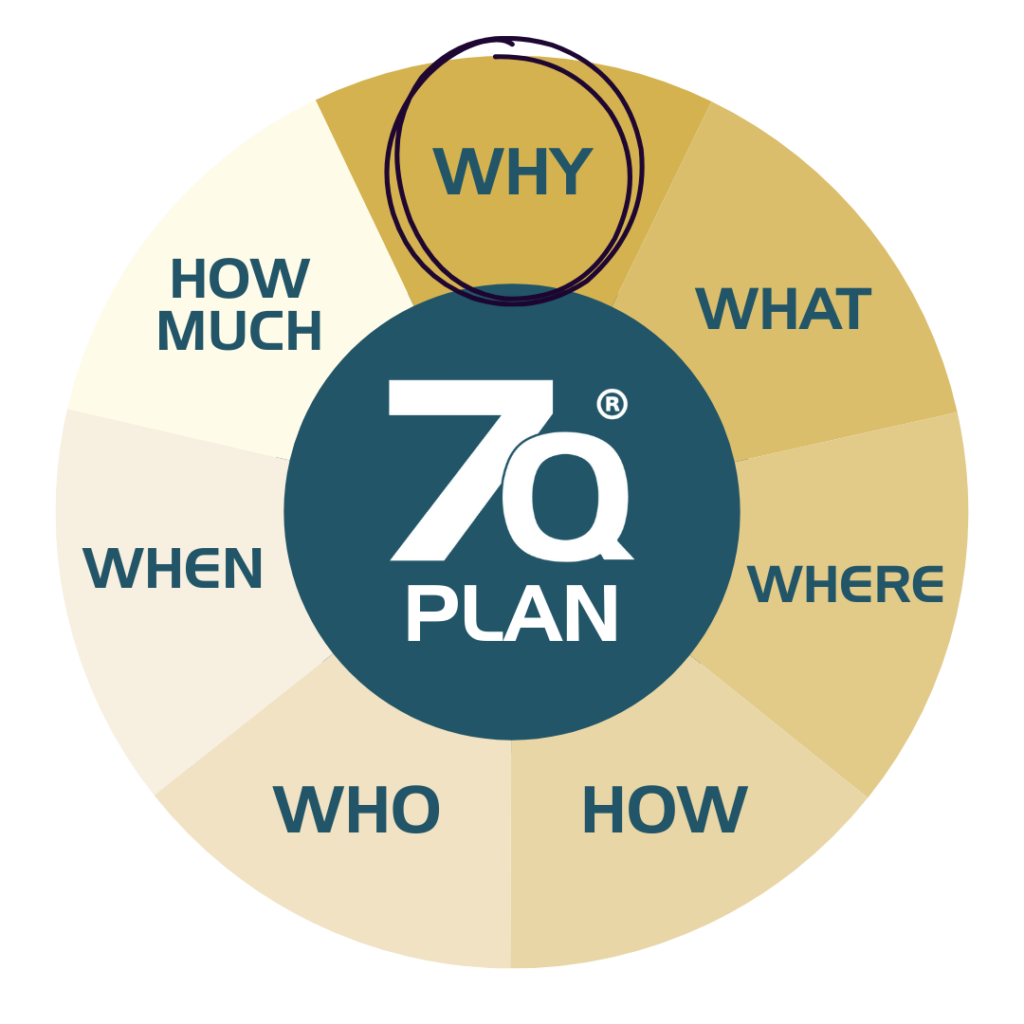
1. WHY – The Question Everyone Skips (and the one that matters most)
Most plans fail because no one can clearly explain why the work is happening. Without a strong WHY, you’re not planning – you’re guessing.
The WHY defines:
- The purpose
- The benefits
- The business value
- The metrics that prove success
Your WHY is your constant. It stays the same, even as your scope, timelines, resources, or approach shift around it. That’s what makes it the most important question to get right. So, once you’ve established your WHY, everything else in the 7Q framework is built around it.
Example of a strong WHY:
“We are implementing a new CRM to reduce customer response times by 40% and increase retention by 15% within 12 months.”
This WHY is clear, measurable, and valuable.
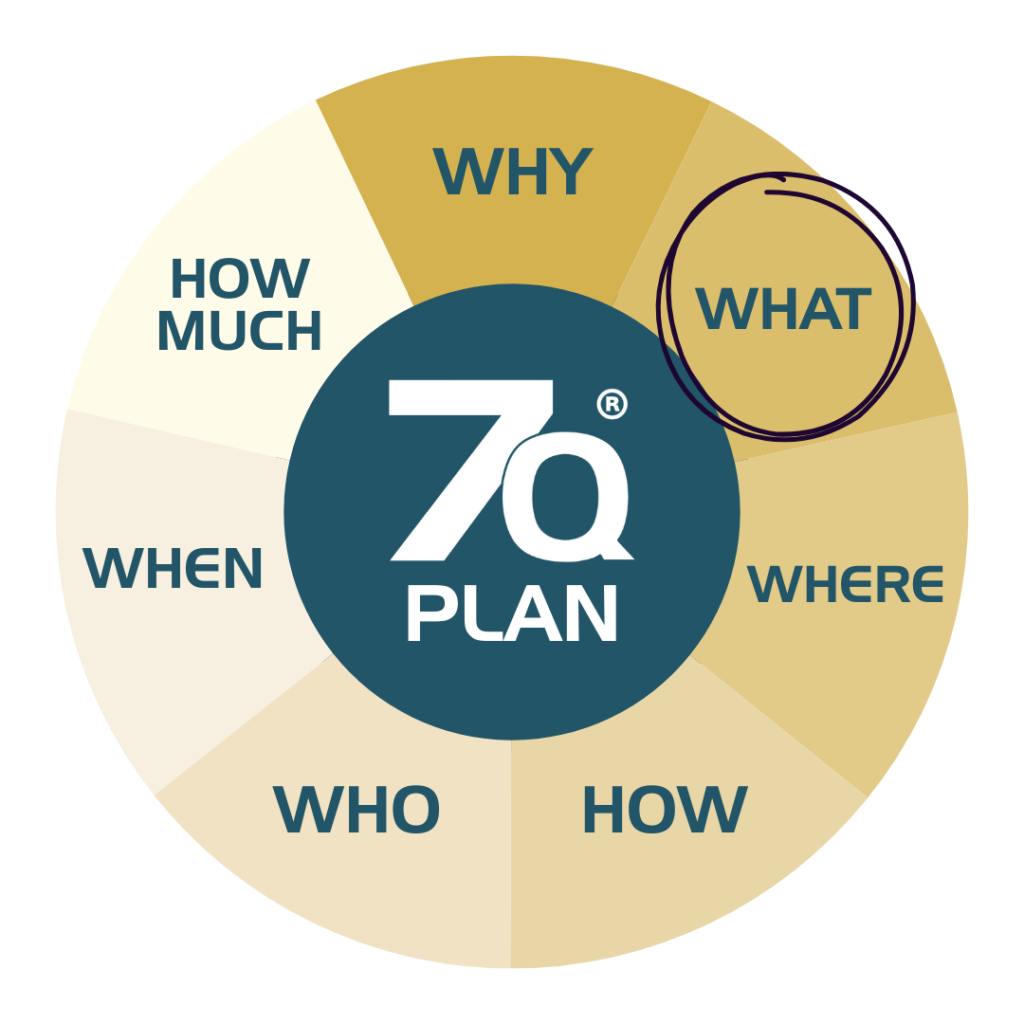
2. WHAT – Scope That Serves the Purpose, Not the Ego
WHAT is about what you are actually going to do.
Most teams start with the WHAT, which locks them into a solution before they’ve defined the problem. That’s why their plans fall apart.
The WHAT defines:
- The scope
- The deliverables
- The high-level approach
The rule is simple: the WHAT must serve the WHY.
If the scope doesn’t deliver the intended benefits, it’s the wrong scope – whether you’re writing a strategic business plan or mapping out a transformation project.
Example of a good WHAT:
“Deliver a cloud-based CRM with automated ticket routing, customer history tracking, and reporting dashboards.”
This WHAT directly supports the WHY and clearly specifies the deliverables involved.
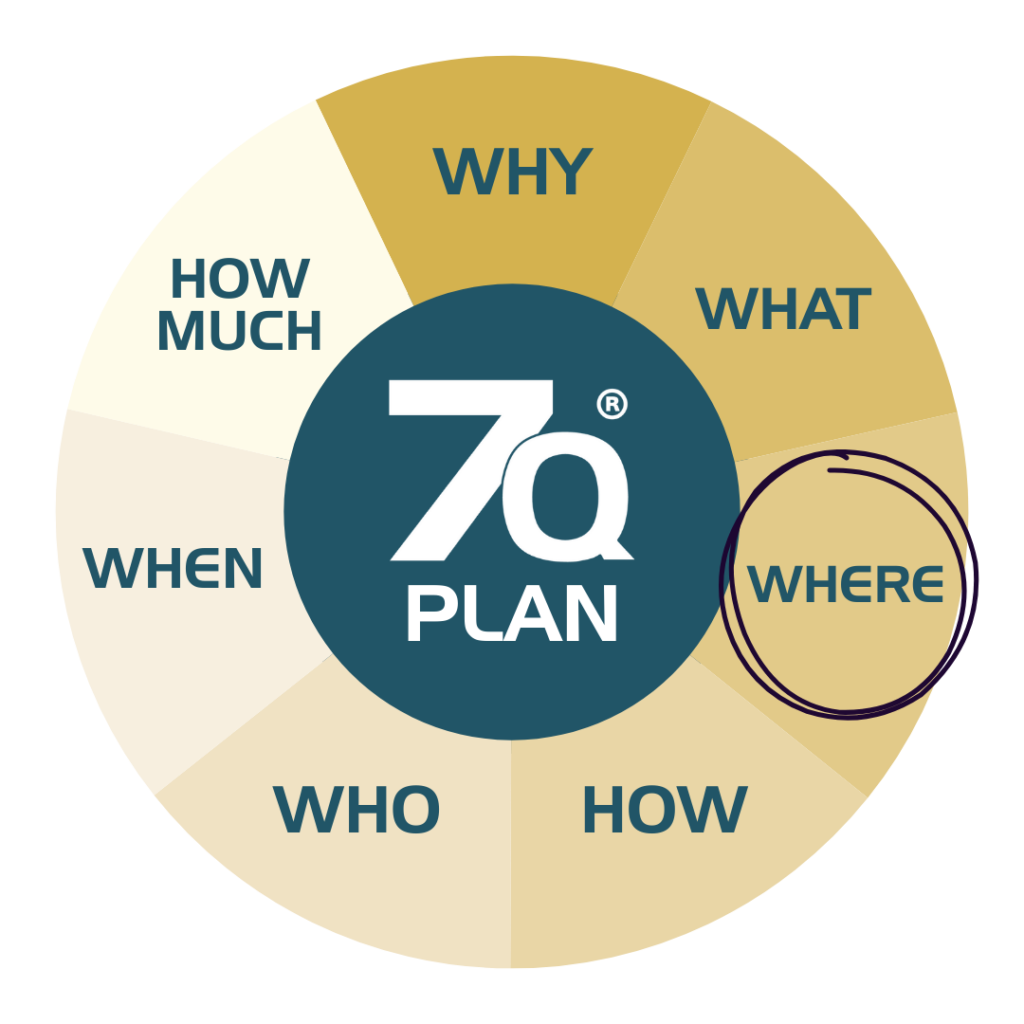
3. WHERE – The Hidden Gap That Breaks Execution
WHERE defines the environments, locations, or systems involved:
- The markets
- The regions
- The systems
- Physical or digital environments
It’s the context of the work – where it actually happens.
If you don’t define where the work happens, you create blind spots – and blind spots create delays, rework, and cost overruns.
The 7Q structure treats WHERE as a core question because it closes gaps before they become problems.
Example of a clear WHERE:
“The CRM will be rolled out in the UK, integrated with our existing telephony system, and hosted in our Azure environment.”
This WHERE defines all locations and systems involved, removing any ambiguity.
4. HOW – The Strategy, Structure, and Steps
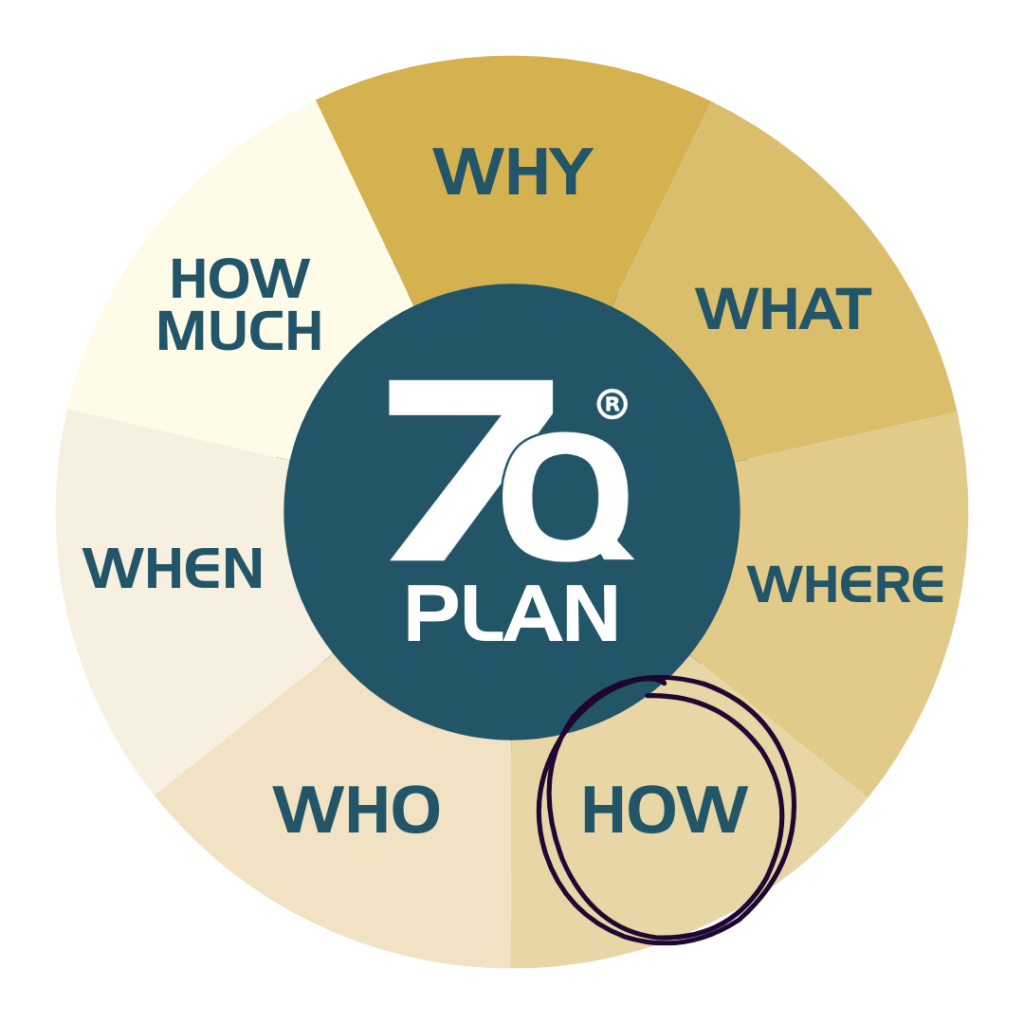
HOW is where planning becomes actionable. It turns intention into a clear, deliverable approach – this is the part most associated with project management and project management consultancy.
The HOW defines:
- The strategy
- The work breakdown
- The phases
- The tasks
Only once you know the WHAT and WHERE can you break the work into steps that people can actually execute.
It’s the difference between saying “We’ll build a house” and actually having the architectural design, planning approval, materials, and resource plan that shows how it will come together.
A good HOW gives enough structure to guide delivery without drowning anyone in detail.
Example of a solid HOW:
“Phase 1: Requirements and design. Phase 2: Build and configure. Phase 3: Testing. Phase 4: Training and rollout.”
This HOW breaks the work into clear, logical phases that show how the plan will be delivered end‑to‑end.
5. WHO – Ownership, Accountability, and Influence
Every plan succeeds or fails because of people.
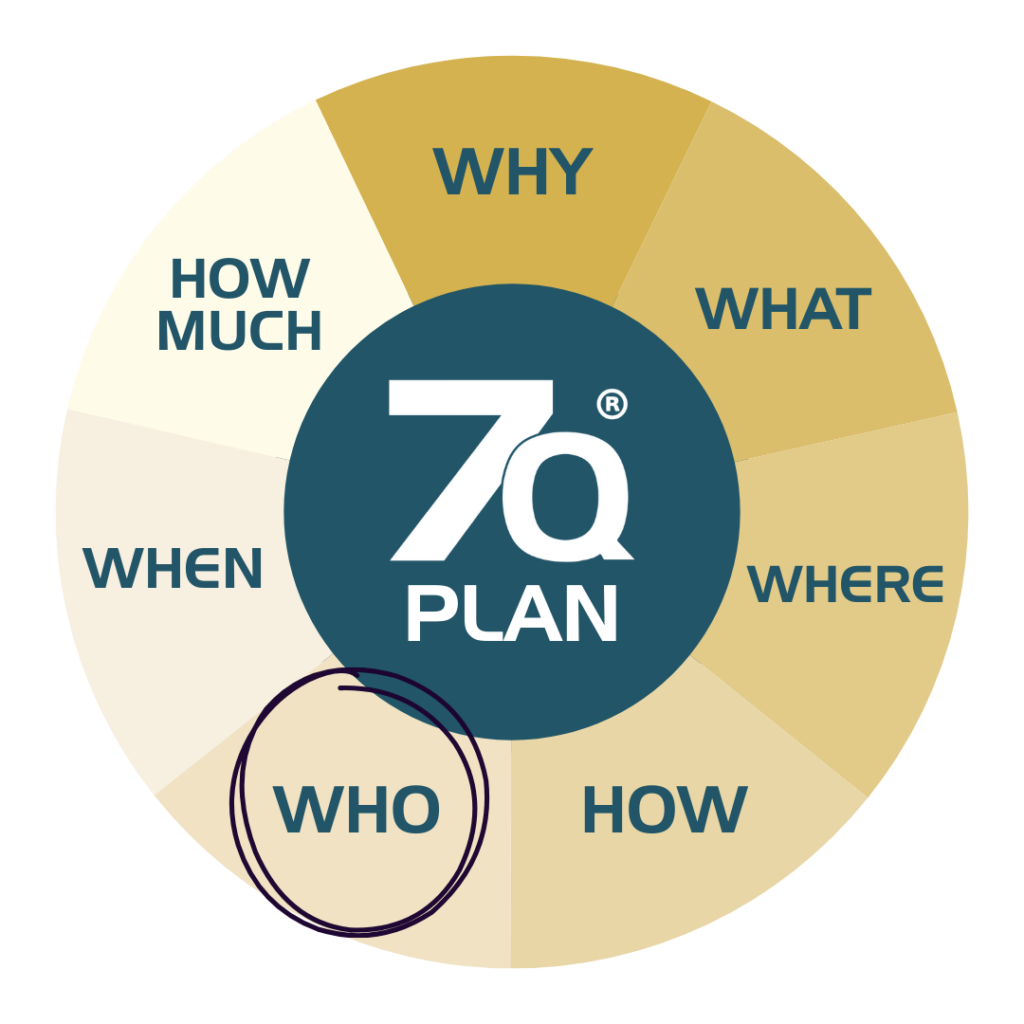
WHO is simply about who is involved. It identifies:
- The delivery team
- The sponsors
- The approvers
- The blockers
- The stakeholders
- Anyone who can accelerate or derail progress.
This is where strategic advisory services and governance consultancy often focus: ensuring the right people are accountable and aligned.
In 7Q, WHO comes after HOW because the work determines the resource – not the other way around. This prevents resourcing plans based on assumptions rather than actual work.
Example of a clear WHO:
“Project sponsor: COO. Delivery team: internal IT + external CRM partner. Approver: Head of Customer Service.”
This WHO assigns ownership and decision-making roles, ensuring accountability and reducing stakeholder risk.
6. WHEN – Timelines Based on Reality, Not Hope
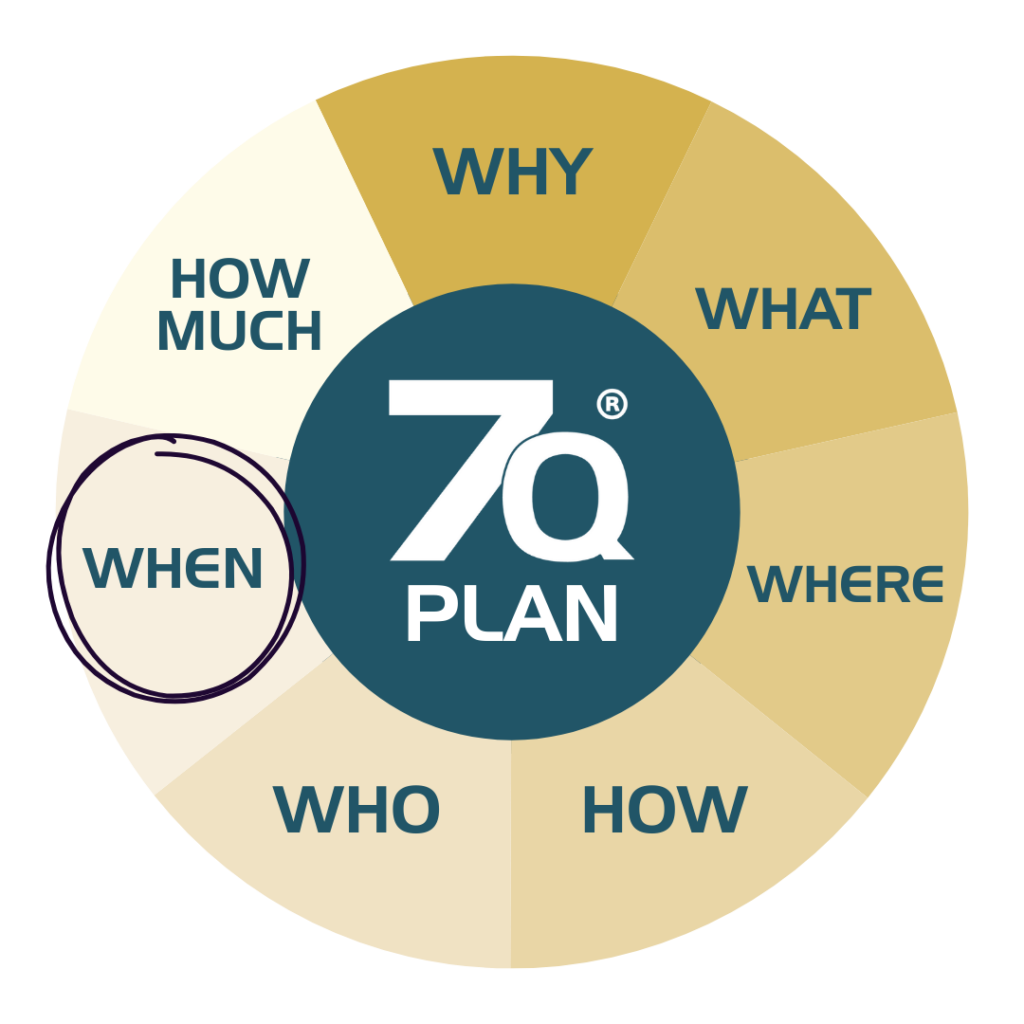
The WHEN is simply about when the work is going to happen – the timeline for delivery.
You can’t set a realistic timeline until you know:
- What you’re doing
- Where you’re doing it
- How you’re doing it
- Who’s available
Most organisations jump straight to deadlines. That’s how unrealistic plans are born – especially in SMEs where resource constraints are real.
The 7Q approach instead treats WHEN as a downstream decision, rooted in resource availability and the true scale of the work. This ensures timelines are based on reality, not hope.
Example of a realistic WHEN:
“Project delivery: 16 weeks, based on resource availability and phased rollout.”
This WHEN sets a timeline based on actual scope and resource availability – not guesswork – which prevents unrealistic expectations.
7. HOW MUCH – The True Cost of Change
HOW MUCH brings financial truth into the picture.
This is simply about how much the work will cost – the full financial picture needed to make an informed decision.
It includes:
- Internal resource costs
- External suppliers
- Capex
- Materials
- Subcontractors
The WHY sets out the benefits; HOW MUCH reveals the full cost. Comparing the two is vital, as it shows whether the plan is viable and worth pursuing.
Example of a clear HOW MUCH:
“Total cost: £85,000 (software, implementation partner, internal resource). Expected benefit: £250,000 annual retention uplift.”
This HOW MUCH calculates true costs and aligns them to the WHY’s expected benefits, enabling a value-based decision.
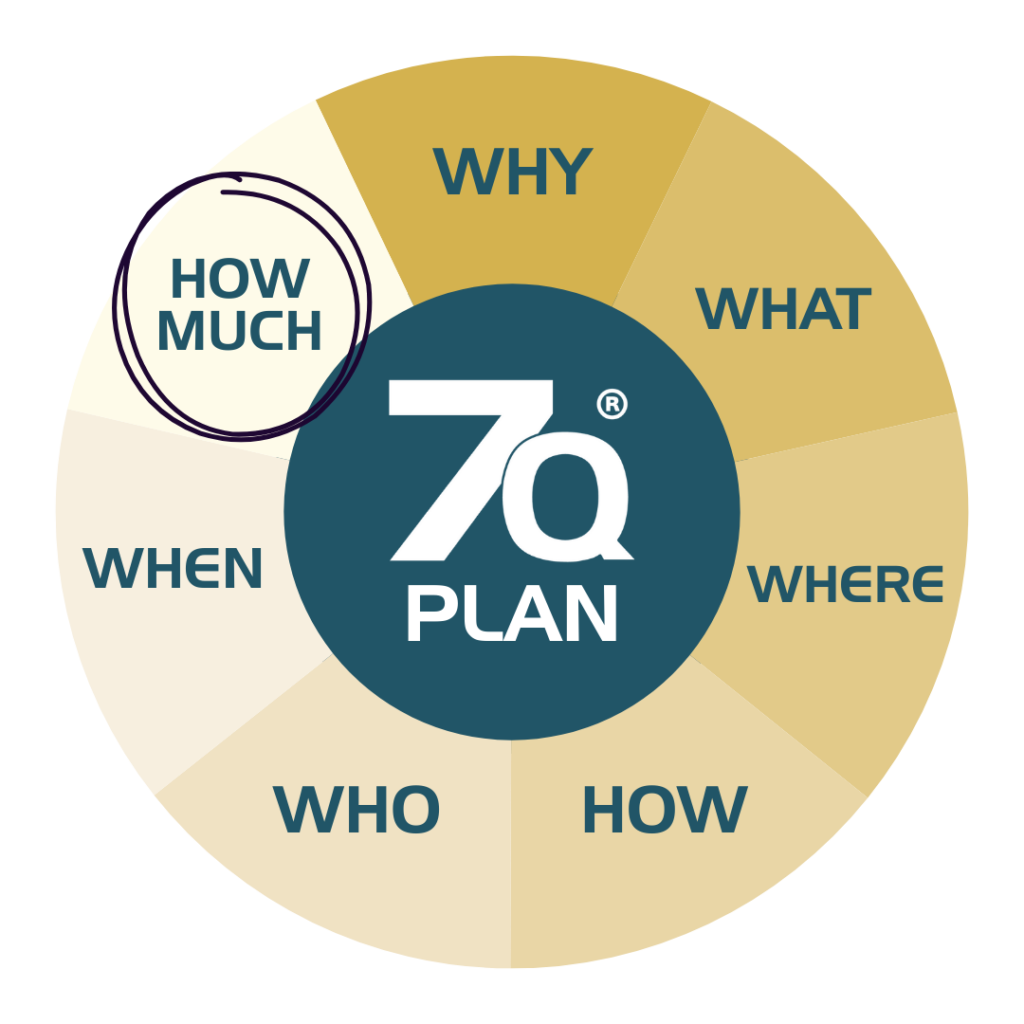
Planning Isn’t Linear. It’s Circular
Once you’ve answered all seven questions, you loop back.
You compare HOW MUCH and WHEN against the WHY:
- Is it still worth doing?
- Does the scope need adjusting?
- Is the approach realistic?
- Do the resources need rethinking?
This iterative loop is a core principle of the 7Q method. It’s what separates effective strategic planning methods from static documents that gather dust.
It’s also the foundation of good governance – the kind used by strategic advisory firms, boards, and leadership teams to protect value and maintain alignment.
One language for change
Imagine every leader, every team, every board member using the same seven questions to build, challenge, and communicate plans.
No fluff.
No confusion.
No more “death by PowerPoint.”
Just clarity, alignment, and action – whether you’re running a major transformation or building an SME business plan from scratch.
These seven questions create a shared language that helps organisations plan better, communicate better, and deliver better – whatever they’re trying to achieve.
The 7Q approach is simply a structured way to apply these questions consistently. It gives teams a repeatable rhythm for planning, reviewing, and adjusting their work, whether they’re shaping a one-page business plan or navigating complex change. Many organisations use it as a practical lens to bring discipline and accountability into their strategy and execution.
If you’re exploring how to strengthen your planning process, improve governance, or bring more clarity to your projects, get in touch to discuss how the 7Q approach might support your goals.
Transcript:
Hello, I am Fred and I am going to be taking you through how to master any plan in seven questions. This is particularly pertinent to you if you’re involved in change, transformation, R&D projects, systems, IT, a sales plan, a marketing plan, a business plan. This is a way to master the change that you wish to bring with your plan.
Looking here at 7Q, there are seven questions in this plan and they’re in a certain order for reasons I’m going to go into.
The first question that you need to master before you complete a plan is why. Why are you doing it? I call this the purpose, the benefits, which include specific metrics. That might be earnings, pounds, or dollars, but it needs to be specific. If you can’t explain why you want to do something with specific metrics, you aren’t going to deliver anything that gives any tangible value and outcomes. Describe the outcomes that you want so that people looking at it can understand this and help you deliver them, help you get them.
The why comes first because you need to know your purpose to do something.
The next question we move on to is what are we going to do that helps us deliver the purpose, the benefits, and the outcomes that we want. I call this scope, deliverables – you might create a specification. This describes the highlevel things you’re going to do to deliver the benefits required. The importance of putting what second is that it is subservient to the why. You can come up with many ways to solve someone’s problem. There’s more than one. And actually looking at planning in a way that says, “Let’s come up with five or six different scenarios to solve this outcome that we want,” is really good practice to help you get clearer in your planning.
If you start with what, you’re already fixed, and then people tend to try and justify why they’re doing it afterwards – maybe even complaining that they need to justify it. If you don’t know why you’re doing something, stop.
The third question is where. That might be markets such as aerospace, pharmaceutical, construction. It might be regions – the Middle East, Europe, America, Asia. And in a lot of projects now, systems: “We’re going to be doing it in our CRM,” “We’re going to be putting it into our ERP.” This is where you’re going to do it.
The first three questions we’ve just covered are really important to define before you move forward into asking anybody to give you a plan, because without this information people can’t give you an effective plan.
The next question is how. We’re getting into the more detailed part. This is where your planners really need to get involved. Think about the approach. Maybe you’re going to guide them on the strategy. We take the work that we think is required to deliver the scope or the deliverables, and we break it down into a work breakdown structure. If I want to build a house, I need to break this work into pieces. I need an architectural design. I need to apply for planning. I’m going to have to get some quotes. I’m going to have to order materials. I need to organise my resources. That’s the breakdown of the work. And then you may put in the tasks. They’re all how you’re going to do it.
It’s really important before you get into your resources that you know what you’re doing, where you’re doing it, and how you intend to do it, because the how will dictate who we need to do this.
So the next question is who. This is the team or resources that you need. Often missed at this stage is: who are the stakeholders that are going to have some kind of influence or say over this project? That would not only be the people asking for the plan – maybe the sponsors, the customers – but also who’s going to influence it. Are there people involved in approving the plan? Are there people going to be trying to block the plan? You need to have a strategy for how you deal with them. They’re all stakeholders in the project.
You need to think about the availability of your resources because if you don’t have clear availability, then you’re not going to be able to determine when you’re going to deliver this.
So the sixth question is when. These are the timelines. Maybe there are milestones or gateways. You may have roadmaps to draw up. This is when we think we’re going to do something by.
Let’s be clear: starting, like many people do, with what – without understanding why they’re doing it – they go straight across to when: “We need to do it by this time,” and then they start talking money. But nobody has sat down and thought: where are we doing it, how are we going to do it, and who’s going to be needed to do it? You can only think about your timelines when that work is done.
The seventh and final question is how much. This is costs – because the revenue or benefits go in the why. Costs include the cost of your resources, and I’m always a big proponent of measuring the cost of your internal employee time because without it you have no idea what you’re actually spending on your changes. You may have capital expenditure. You might be putting down a new production line and there’s equipment to buy. You may have materials. There may be subcontractor costs. They all go in the how much.
Now we’ve reached the end of the seven questions. Planning is not linear – it is circular. We now iterate. And that’s the beauty of the 7Q planning wheel: it encourages you to say, “We’ve just written down when and how much. We can now compare that to our why, the reason for doing the project in the first place.”
Sometimes you may sit there and think, “This is going to take way too long and cost way too much. We’re going to kill it.” Or actually, let’s iterate and spin again. Do we need to tweak why we’re doing this and adjust our metrics? Maybe we’ve gone into a more complicated scope than we needed. Maybe we look at how we’re going to approach this and say, “We could do this in a different way.” Maybe it’s the resources – maybe they’re not available and we need different ones. That will impact the timelines, which will impact how much it’s going to cost.
You keep going round until you iterate towards a final project plan, business plan, marketing plan, or sales plan that everybody can buy into. This is the art of mastering a plan.
Imagine everybody in a business knows how to use these seven questions and how to present a plan. You now have one language for change – and that’s what 7Q is. Seven questions, one language for change.
If you’re involved in change, or you know someone who is, share this video with them to help them on their journey into change in the next 12 months. Do subscribe, like, and feel free to get in touch with any questions you’ve got around transformation, change, and putting 7Q into your organisation or company.
Struggling with plans that look good on paper but fall apart in delivery?
Request a 7Q Change Governance Audit – a focused assessment that reveals why your strategies break down and where your planning, communication, or decision‑making is misaligned.