
What is change governance, and how is it different
from change management?
Published by 7Q Ltd – One Language to Plan, Communicate & Track Change
What is Change Governance?
Change governance is the system of control that ensures every change initiative stays aligned to its purpose, benefits, and agreed priorities. It defines how decisions are made, how accountability is structured, and how results are tracked throughout the life of a programme.
In plain English, it’s how you make sure the change you planned actually delivers the results you promised.
Change governance connects three critical elements:
- Purpose – Why are we changing?
- Cadence – How do we review and steer progress?
- Evidence – How do we know it’s working?
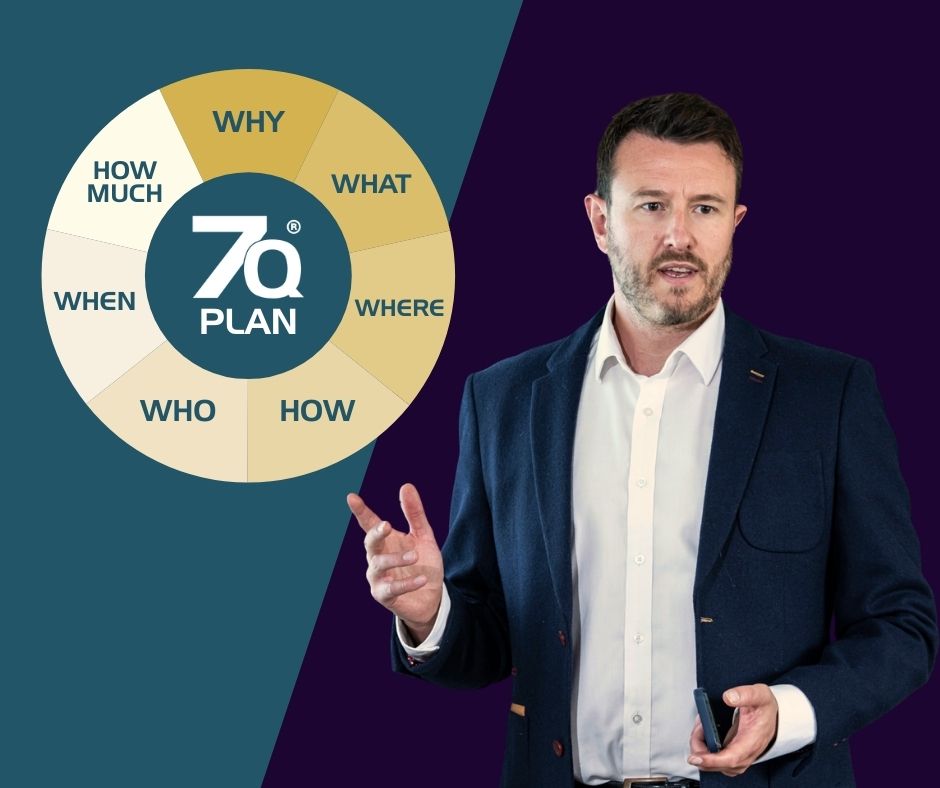
At 7Q Ltd, we summarise these through the 7Q Method:
One language to Plan, Communicate & Track Change.
Why Change Governance matters?
Most organisations now invest heavily in change management, yet independent research shows most transformations still fail.
According to the Project Management Institute’s 2021 Pulse of the Profession Report, only 35% of projects are completed successfully, and nearly half fail to meet original goals. McKinsey’s data echoes that: 70% of transformations fail to achieve their intended outcomes.
The reason isn’t a lack of effort, it’s a lack of governance. That’s where change governance comes in.
How Change Governance differs from Change Management
| Focus | Change Management | Change Governance |
| Purpose | Prepare people for change and manage adoption. | Ensure change stays aligned with business strategy and benefits. |
| Core question | “How will people adapt?” | “Is this change delivering the outcomes we set out to achieve?” |
| Typical owner | HR, transformation or communications teams. | Leadership, board, or PMO / governance office. |
| Output | Stakeholder plans, communications, training, resistance management. | Decision cadence, reporting, benefits tracking, accountability structure. |
| Time horizon | Implementation and adoption phase. | From planning through delivery to post-project benefits realisation. |
In short:
Change management makes change acceptable.
Change governance makes change accountable.
Why organisations need Change Governance & Management
When governance is missing, projects drift. Meetings multiply, but decisions lag. When management is missing, people resist, and adoption stalls.
The two are complementary. Governance creates clarity and accountability; management creates engagement and momentum. Together they form a complete system of control and communication.
According to the Association for Project Management (APM) 2022 report on Governance of Projects, organisations with formal governance frameworks are 40% more likely to meet their strategic objectives than those without.
What good Change Governance looks like
A mature governance system will:
- Link every project’s WHY (purpose) to measurable benefits.
- Define clear decision rights — who approves, who reviews, who reports.
- Run a regular Review cadence — so deviations are caught early.
- Keep information visible through dashboards or one-page plans.
- Track benefits realisation beyond project closure.
7Q Ltd’s Change Governance frameworks deliver these through a simple, structured rhythm:
- Plan – Define the WHY, WHAT, and HOW before action begins.
- Communicate – Align teams and leaders around one shared language.
- Track – Review progress, measure benefits, and adjust decisions quickly.

Example: How governance fixes common project failings
An organisation launches a major IT transformation.
- Their ‘change management’ approach ensures employees are trained and ready for the new system
- But six months later, performance KPIs haven’t improved, the system hasn’t delivered any benefit, because decisions about data, budget, and priorities were unclear.
Governance would’ve solved this by:
- Setting measurable success criteria upfront.
- Creating a Review cadence (e.g., monthly steering forums).
- Ensuring benefits, risks, and ownership are visible to leadership.
That’s the difference between delivering a project and delivering a result.
Common challenges that signal weak governance
- Projects that never seem to finish (always 3 months from completion)
- No single source of truth for reporting.
- Benefits case is vague or non existent.
- Leadership decisions are based on opinion, not sound information.
- People are confusing being “busy” with “effective.”
If any of these sound familiar, governance — not effort — is the missing ingredient.
How to get started with Change Governance
You don’t need to overhaul your organisation overnight. Start by introducing three basic practices:
- Clarify the WHY for every major change (the benefits or business case).
- Define decision ownership – who gets to approve benefits cases?
- Hold a regular Review that reviews progress against the WHY, the purpose or benefits case.
These small steps create visibility and confidence, the foundation of any effective governance system.
The 7Q Method in summary
The 7Q Method provides a universal framework for Change Governance built around seven questions: WHY, WHAT, WHERE, HOW, WHO, WHEN, and HOW MUCH. It ensures that every plan, every conversation, and every review connects directly back to purpose and measurable outcomes.
Plan with clarity. Communicate with confidence. Track with purpose.
Key takeaways in change governance
- Change management helps people adopt change.
- Change governance ensures change delivers results.
- Both are essential; governance keeps strategy connected to delivery.
- The 7Q Method brings them together through one simple language.
Further reading
- PMI Pulse of the Profession 2021 – Project success rates and governance trends.
- APM Governance of Projects 2022 Report – Correlation between governance and delivery success.
- McKinsey & Company (2023) – “Why 70% of transformations fail.”
Want to know if your organisation has the right governance in place?
Request a 7Q Change Governance Audit — a concise review of how you plan, communicate, and track change today.